Chinese Mold Steel Exports: Surging Demand in Southeast Asia & Unmatched Competitive Edge

The global mold steel landscape is shifting rapidly, and Chinese manufacturers are emerging as key players in international markets—especially in Southeast Asia, where demand is booming. This article will detail the latest export data, the explosive growth of demand in Southeast Asia, and the core reasons why Chinese mold steel has become the first choice for global buyers.
Export Performance: Steady Growth and Rising Global Share
Supported by strong overseas demand and continuous quality upgrades, China's mold steel exports have maintained a strong momentum in 2026.
2025 Full-Year Data: Exports reached approximately 250,000 tons with a total value of $840 million, a year-on-year increase of 9.2%.
2026 Q1-Q2 Trend: Export growth is expected to remain at 8%—10%, outpacing the overall growth rate of China's steel exports.
Market Structure: Although China still has a trade deficit in mold steel (imports of high-end products are about 320,000 tons), the structure of export products is continuously optimizing—mid-to-high-end grades (such as high-quality H13, P20 and powder metallurgy steel) have accounted for more than 35% of total exports.
Southeast Asia has consolidated its position as China's largest export market, accounting for more than 40% of China's total mold steel exports.
Southeast Asia: The Fastest-Growing Mold Steel Market in the World
Driven by the automotive, electronics and consumer goods industries, Southeast Asia's manufacturing industry has ushered in prosperous development, triggering an unprecedented surge in demand for mold steel.
Explosive Regional Demand: The Southeast Asian mold steel market is growing at an annual rate of 25%, while local production capacity is far from meeting the demand. Thailand alone needs to import 20,000—30,000 tons of mold steel every year, mainly relying on imports from Japan, Germany, China and South Korea.
China's Rising Market Share: China's mold steel share in the Southeast Asian import market jumped from 35% in 2025 to 42% in Q1 2026, narrowing the gap with Japan (45%).
Core Product Demand: The most popular grades in the Southeast Asian market are P20 (plastic mold steel), H13 (hot-work mold steel) and D2 (cold-work mold steel)—all areas where Chinese manufacturers have strong technical advantages.
Three Core Competitive Advantages of Chinese Mold Steel
What prompts global buyers (especially those in Southeast Asia) to abandon traditional European, American, Japanese and Korean suppliers and choose Chinese mold steel? The answer lies in its unmatched combination of price, quality and delivery speed:
1. Cost-Effectiveness: 30%—50% Lower Than European, American and Japanese Counterparts
Relying on mature supply chains, large-scale production and optimized processes, Chinese manufacturers offer products that are 30%—50% cheaper than their German and Japanese counterparts, without reducing core quality standards. This price advantage is crucial for Southeast Asian buyers in cost-sensitive manufacturing industries.
2. Quality Upgrade: The Gap with Global Leading Levels Continues to Narrow
Leading Chinese mold steel producers have invested heavily in vacuum smelting, electroslag remelting and powder metallurgy technologies. Today, China's mid-to-high-end mold steel can achieve:
Stable hardness uniformity (hardness tolerance of pre-hardened grades such as 718H is ±2 HRC)
Excellent toughness and thermal fatigue resistance (the service life of powder metallurgy grades can reach 2.3 times that of traditional H13)
Compliance with international standards (ISO, ASTM, EN) and relevant certifications (SGS, TUV)
3. Fast Delivery: 2—4 Weeks vs. 6—12 Weeks for European, American and Japanese Suppliers
One of the biggest pain points for global buyers is the long delivery cycle of Western suppliers. Chinese manufacturers excel in this regard, with a standard delivery cycle of only 2—4 weeks (compared with 6—12 weeks for German and Japanese competitors). Many enterprises also keep a large inventory of common grades, enabling immediate shipment of urgent orders.
Conclusion: A Win-Win Pattern for Chinese Exporters and Global Buyers
The surge in China's mold steel exports to Southeast Asia is not a short-term trend, but a structural transformation driven by the following factors:
The expansion of Southeast Asia's manufacturing industry and its dependence on imported mold steel
The continuous quality upgrading and cost advantages of Chinese manufacturers
The dividends of the RCEP agreement reduce trade barriers and promote regional trade development
For global buyers, Chinese mold steel provides a perfect balance of cost-effectiveness, quality and reliability; for Chinese exporters, Southeast Asia is a key growth market to expand business scale and enhance global competitiveness.
Entering the second half of 2026, we expect this growth momentum to continue—Chinese mold steel will further penetrate the high-end market in Southeast Asia and expand into emerging regions such as the Middle East, Africa and Latin America.
Interactive Exchange
What is your experience with Chinese mold steel? Are you based in Southeast Asia and looking for reliable suppliers? Or are you a global buyer looking for cost-effective mold steel solutions? Welcome to discuss in the comment section!
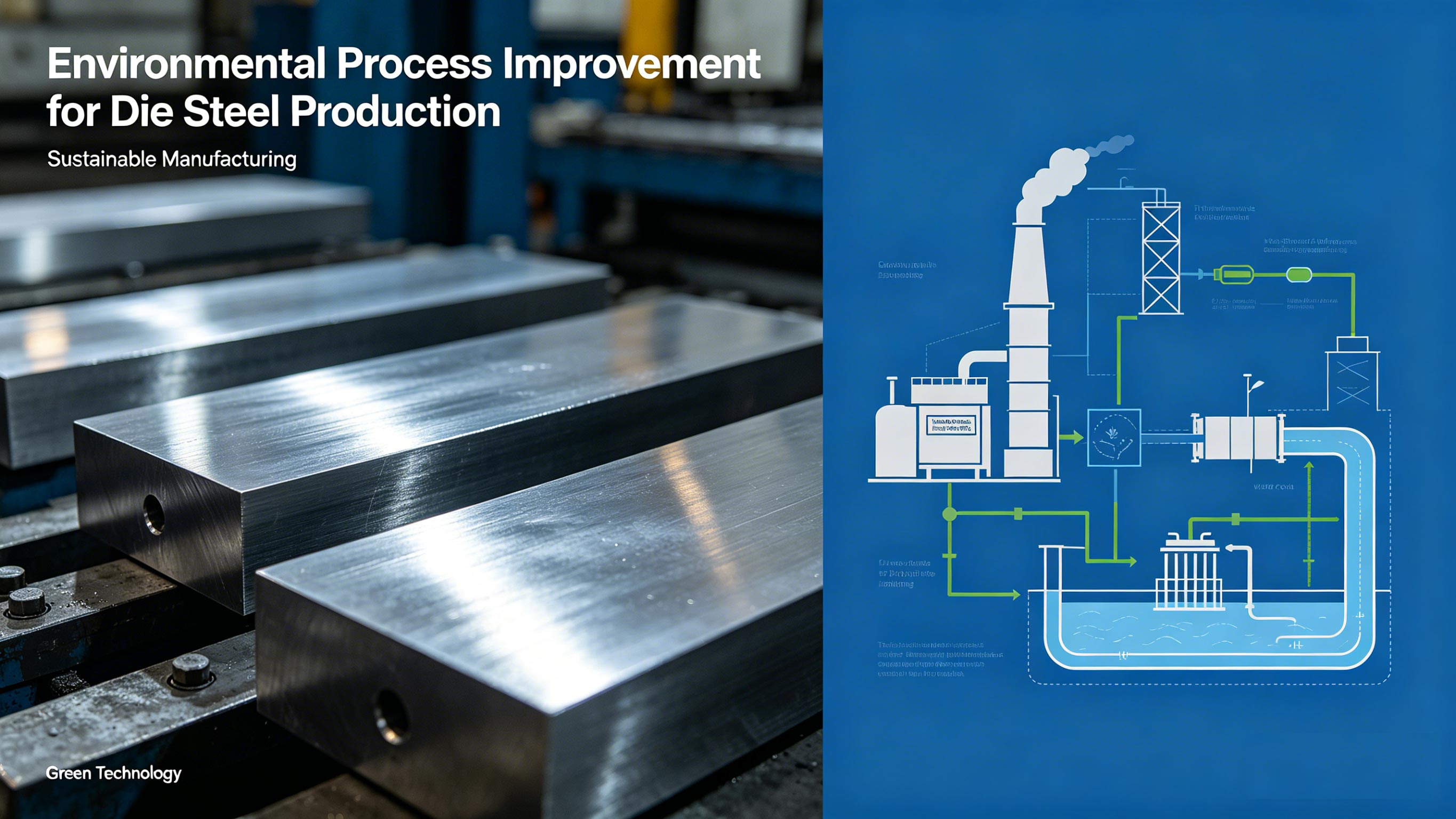
From Pollution Control to Green Innovation: The Upgrade Path of Environmental Protection Processes in Mold Steel Production
Related Article