Steelmaking Process: Key Differences Between EAF and ESR

In modern high-end manufacturing, electric metallurgy has become the mainstream approach for producing high-quality steel, thanks to its eco-friendly and precise characteristics. Electric Arc Furnace (EAF) steelmaking and Electroslag Remelting (ESR) are two core processes that operate in a sequential, complementary manner rather than as parallel methods. EAF serves as the primary melting stage, while ESR is an advanced refining step added on the basis of EAF, specifically designed to eliminate harmful impurities in steel and enhance its ultimate performance. Understanding their differences is critical to selecting the right materials and controlling product quality.
Electric Arc Furnace (EAF): Primary Melting for Efficient Mass Production
EAF is the most widely used primary steelmaking process, which uses scrap steel and direct reduced iron as raw materials. It melts solid feedstock into qualified molten steel rapidly via high-temperature electric arcs generated by graphite electrodes, completing basic composition adjustment and decarburization.
This process excels in high productivity, controllable costs and strong raw material adaptability, making it the core method for large-scale production of conventional steel. It is widely applied in construction, general machinery and standard components. However, as a primary process, EAF only removes macroscopic impurities, leaving trace harmful elements such as sulfur, hydrogen and fine non-metallic inclusions that cannot meet the demands of extreme working conditions.
Electroslag Remelting (ESR): Secondary Refining for Purification & Performance Enhancement
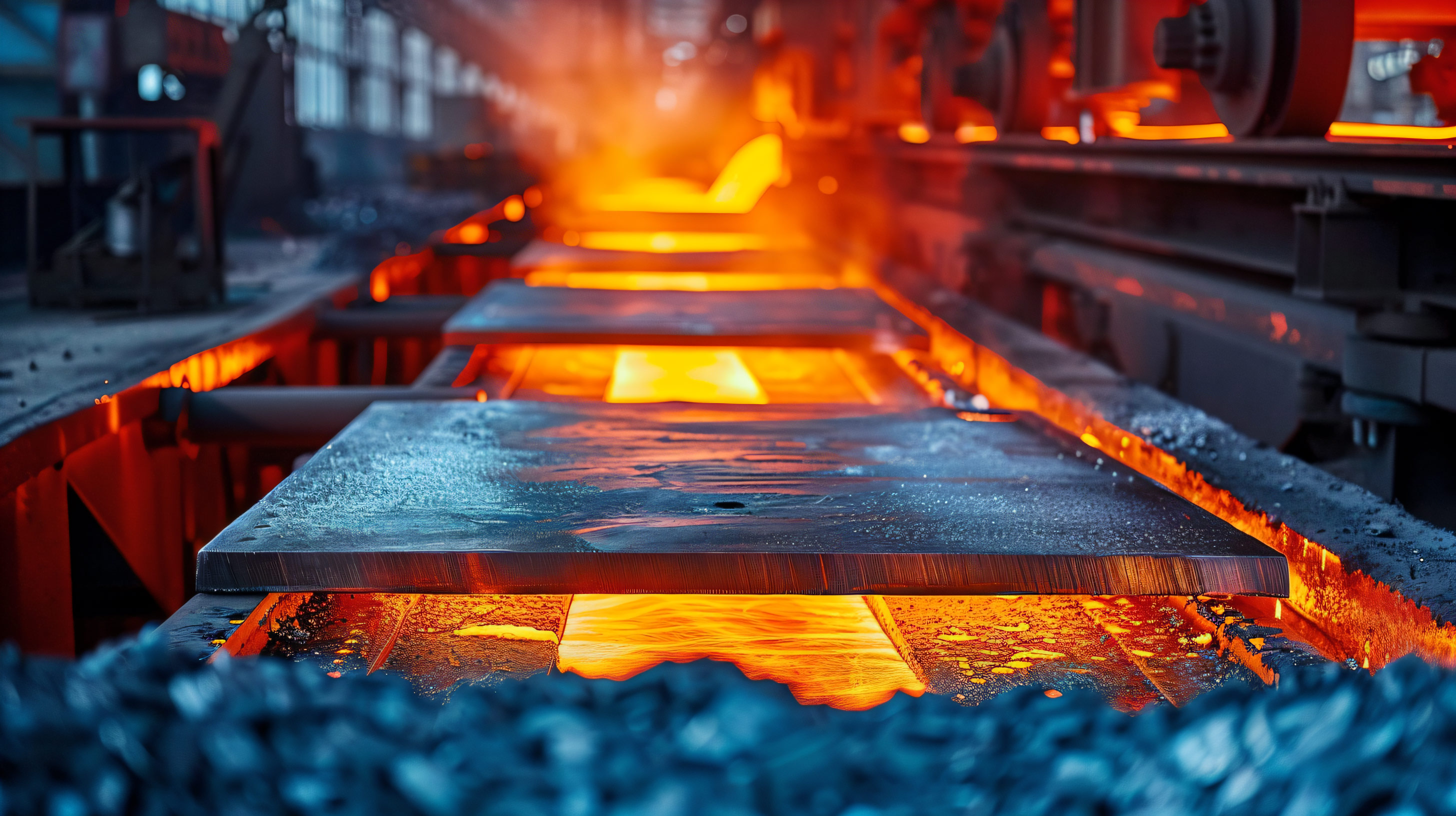
ESR is not an independent steelmaking method, but a secondary refining process based on EAF products. It takes the steel billet produced by EAF as a consumable electrode, remelts the steel using resistive heat from molten slag, and forms a solidified ingot via directional cooling in a water-cooled crystallizer.
The molten slag acts as a "high-efficiency purification filter", accurately adsorbing and removing trace harmful elements and fine inclusions that EAF cannot eliminate. It also eliminates internal defects such as porosity, shrinkage and chemical segregation in steel ingots, greatly improving steel purity, density and mechanical properties. Simply put, ESR performs a "deep purification and upgrade" on EAF steel, transforming conventional steel into high-end specialty steel.
Core Comparison: EAF vs. ESR
|
Comparison Item |
Electric Arc Furnace (EAF) |
Electroslag Remelting (ESR) |
|
Process Position |
Primary melting, first production step |
Secondary refining, post-EAF upgrade step |
|
Core Function |
Mass production, basic composition control |
Deep impurity removal, defect elimination, performance improvement |
|
Impurity Control |
Basic impurity removal, residual trace harmful elements |
Deep desulfurization, dehydrogenation, complete removal of fine inclusions |
|
Typical Applications |
Conventional engineering, mass-produced parts, standard steel |
Aerospace, medical, nuclear power, precision molds and other high-end fields |
Process Synergy & Value Summary
ESR is not a replacement for EAF, but a value-added extension process — all ESR steel starts with EAF-produced billets. EAF meets the demand for "accessible and high-volume production" with balanced cost and efficiency, while ESR fulfills the high-end requirement of "high quality and stable performance", endowing steel with superior toughness, fatigue resistance and corrosion resistance for mission-critical applications.
From Pollution Control to Green Innovation: The Upgrade Path of Environmental Protection Processes in Mold Steel Production
Global Alloy Price Shock and Its Impact on the Mold Steel Market: A Structural Analysis
Related Article