In the era of overcapacity, how can the die steel industry break through and be reborn? ——Strategic leap from the red ocean to the blue ocean

Under the dual pressures of production capacity contraction (global crude steel production will drop by 4.3% year-on-year in 2023) and structural adjustment of demand, die steel, as the "skeleton material" of industrial mother machines, is standing at the crossroads of transformation and upgrading. When the growth of traditional manufacturing slows down, and the annual growth rate of emerging fields such as new energy vehicles and clean energy equipment exceeds 25%, the future of the industry lies in the shift from "scale expansion" to "value creation". This article will reveal the six strategic paths for die steel companies to break through.
1. Transformation from "material supplier" to "solution service provider"
When customers' procurement cost sensitivity increases, pure price competition will only intensify internal competition. Leading companies are reconstructing their business models:
ThyssenKrupp launched "Steel-as-a-Service", charging by the number of stampings and providing full life cycle management
Hitachi Metals established a digital material selection platform, integrating material performance database and CAE simulation system, helping customers shorten the mold development cycle by 40%
Baosteel Special Steel formed a rapid response team to complete customized smelting + pre-hardening treatment for emergency orders within 72 hours
Key transformation: Deeply embed technical services into the customer value chain and use knowledge density to hedge against price competition.
2. Focus on high-value tracks and establish technical barriers in niche areas
The essence of weak market demand is structural imbalance. The global demand for integrated die-casting mold steel increased by 35% year-on-year, while the traditional injection mold steel market shrank by 12%. Forward-looking layout should focus on:
New energy track: high temperature resistant mold steel for 8000-ton die-casting machines (tensile strength ≥1500MPa/600℃)
Precision electronics track: nano-level mirror polished mold steel (surface roughness Ra<0.01μm)
Green manufacturing track: recyclable mold steel (laser cladding repair technology extends mold life by 3 times)
3. Digitalization reshapes production paradigm and drives value enhancement with data
Facing the dilemma of less than 70% capacity utilization, smart factories are rewriting the rules of the game:
Wuchan Zhongda Yuantong's AI alloy design system shortens the research and development cycle of new steel grades from 18 months to 6 months
Tiangong International deploys blockchain traceability system to achieve full carbon footprint tracking from scrap steel recycling to finished product delivery
Qingtuo Group applies digital twin technology to control the quenching deformation of large-size mold steel within 0.05mm/m
Data insights: Mold steel companies using the industrial Internet platform have an average increase of 15% in yield rate and a 30% reduction in delivery cycle.
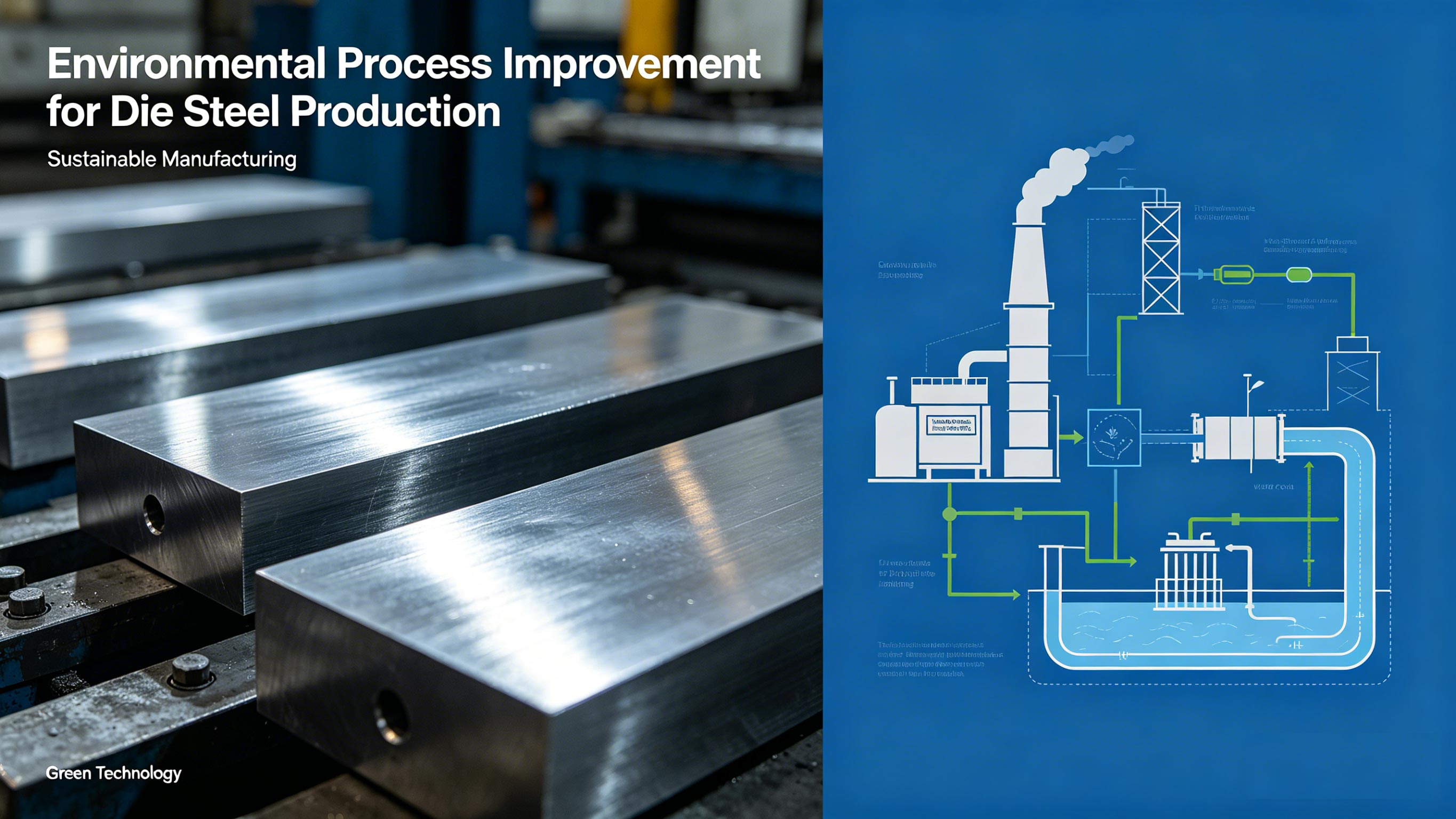
4. Green Premium: From Cost Center to Value Engine
The EU Carbon Border Adjustment Mechanism (CBAM) will soon cover steel products, and environmental compliance has become a hard threshold. Innovative practices include:
Electric arc furnace short-process steelmaking (CO₂ emissions per ton of steel are 65% lower than traditional processes)
Hydrogen energy reduction iron technology test (HYBRIT project has produced zero-carbon mold steel billets)
Application of biomass energy auxiliary heating system in heat treatment
Commercial value: The premium rate of recycled mold steel products certified by GRS is 20-35%, and Tesla's 2023 procurement contract clearly requires a 50% recycled steel ratio.
5. Globalization Layout 2.0: Localized Service + Technology Collaboration
Against the backdrop of rising regional protectionism, new internationalization strategies require:
Establishing mold steel pretreatment centers in Southeast Asia/Mexico (to meet the "last mile" processing needs)
Co-building R&D centers with local universities (such as Northeast Special Steel and RWTH Aachen University in Germany co-developing gradient materials)
Participating in the formulation of international standards (the ISO standard "Plastic Mold Steel Selection Specification" led by China will be released in 2024)
6. Talent Strategy: Cultivating a composite team of "Steel Doctors" and "Digital Craftsmen"
Industry transformation ultimately depends on human capital upgrading:
Hesteel Group established a "Digital Metallurgical Engineer" certification system
Fushun Special Steel and vocational colleges jointly built an "Intelligent Heat Treatment Master Studio"
International Mold Steel Association (ISTA) launched blockchain technology badge certification
Conclusion: Under the haze of overcapacity, what we see is not the dusk of the industry, but the dawn of value reconstruction. When a Chinese mold steel company used 3D printing technology to manufacture smart molds with conformal cooling channels for European customers, shortening the injection molding cycle by 40%, this change has already surpassed the material itself and become an enabling revolution for advanced manufacturing.
Call for action: Is your company exploring innovative applications for mold steel? Welcome to share the latest industry trends in the comments section, and let us jointly draw the future map of this hidden champion industry.
Die Steel Market: The Cornerstone of Manufacturing, Embracing High-End Transformation
1.2083 Mold Steel: A Key Player in Precision Mold Manufacturing
Related Article